Industry news
IEC TS 63379: The Complete Guide to Megawatt Charging for Heavy-Duty EVs
A Complete Guide to Understanding the New Standard for Commercial EV Charging
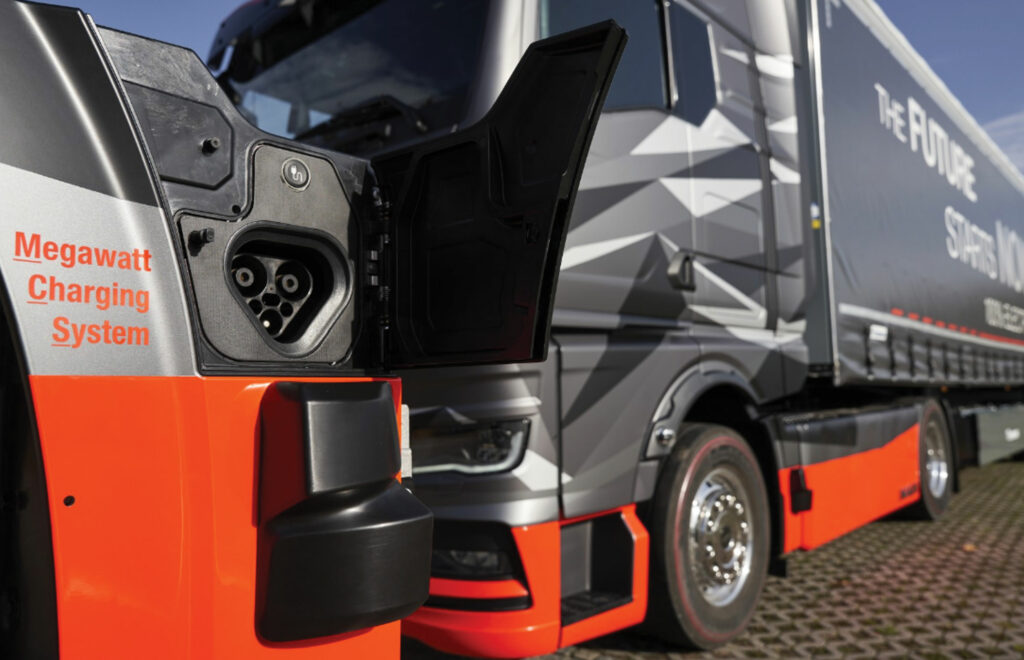
Introduction
The electric vehicle revolution has moved well beyond passenger cars. If you've been following the industry, you've probably noticed that heavy-duty vehicles—long-haul trucks, mining equipment, ferries, and port vehicles—are now in the spotlight. These "energy giants" need massive battery packs, sometimes exceeding 1,000 kWh, and that creates a problem that traditional charging infrastructure simply can't solve.
Try filling a 1,000-liter tank with a garden hose. That's essentially what happens when you try to charge a heavy-duty electric truck using even the fastest available DC fast chargers rated at 350 kW. The math doesn't work. You'd be looking at hours of charging time, which kills the business case for electric freight.
This is exactly why the International Electrotechnical Commission (IEC) developed IEC TS 63379—the world's first technical specification for megawatt charging systems (MCS). Released in early 2026, this specification defines everything needed to charge heavy-duty EVs at power levels reaching 4.5 megawatts.
At our company, we've spent years developing high-power charging solutions, and we've watched this standard take shape from the inside. In this guide, I'll walk you through what IEC TS 63379 actually means for the industry, what technical challenges it solves, and how companies can prepare for this shift.
Chapter 1: Why Heavy-Duty EVs Needed Their Own Charging Standard
The Problem with Current Charging Technology
Here's a number that puts things in perspective: a typical long-haul trucking operation can lose thousands of dollars every minute a vehicle sits idle. When you're running a logistics fleet, charging time directly impacts your bottom line. Unlike a passenger car that sits in a driveway overnight, a commercial truck needs to get back on the road quickly.
The statistics are striking. Heavy trucks represent only about 10% of vehicles on U.S. roads, yet they're responsible for roughly 25% of CO2 emissions from transportation and about 45% of NOx emissions. Major companies like PepsiCo, Amazon, and Walmart have committed to electrifying their fleets, but they can't do it without infrastructure that actually works for their needs.
The bottleneck isn't the vehicles—it's the charging.
Current DC Fast Charging standards like CCS (Combined Charging System) were designed with passenger vehicles in mind. Even the most robust CCS setups max out at around 500 amps. For a heavy-duty truck with a 1,000+ kWh battery, that's nowhere near enough to achieve "refueling speed" charging.
To match the time it takes to fill a diesel tank—say, 20 to 30 minutes—you'd need charging power in the megawatt range, with current exceeding 2,500 to 3,000 amps. That's not just an incremental improvement. It's a complete reimagining of charging system design, involving thermodynamics, advanced materials, mechanical engineering, and sophisticated software controls.
What Is IEC TS 63379 Standard? What it Actually Does ?
IEC TS 63379 is the technical specification that makes megawatt charging possible. Developed with input from major industry players including Daimler, Volvo, ABB, and Siemens, it establishes:
- Standardized connector and inlet designs for megawatt-level power
- Safety requirements specific to high-current, high-voltage systems
- Thermal management and monitoring protocols
- Testing procedures to validate compliance
The spec supports DC voltages up to 1,500V and currents up to 3,000 amps—power levels that would be impossible with traditional air-cooled connectors.
For charging infrastructure companies and fleet operators, understanding this standard isn't optional. It's the roadmap for where the industry is heading.
Chapter 2: The Technical Core — Managing Heat at 3,000 Amps
Why Heat Management Is the Big Challenge
If you remember anything from physics class, you might recall the formula P = I²R. What this means in practice is that when you push current up to 3,000 amps, even tiny resistances create massive amounts of heat. We're not talking about a warm connector here—we're talking about thermal management that makes or breaks the entire system.
Traditional DC fast chargers use air cooling, which simply cannot handle these power levels. Liquid cooling isn't just recommended in IEC TS 63379—it's mandatory for both the charging cable and the vehicle inlet.
But the standard goes far beyond just requiring cooling. It establishes three independent safety barriers that must all work together:
Safety Barrier #1: Physical Design and Timing
The specification requires that the protective earth (PE) connection must make contact first when plugging in and disconnect last when unplugging. This isn't a suggestion—it's a hard requirement that prevents dangerous situations where a vehicle could become energized without a proper ground.
Additionally, the standard mandates dual interlocks (both mechanical and electrical) that lock the connector firmly in place during power transfer. This prevents accidental disconnection, which at these power levels could create dangerous arcing.
We've tested our connector designs through thousands of plug-in cycles to ensure they hold up in harsh industrial environments—ports, mines, and construction sites where these systems will actually operate.
Safety Barrier #2: Real-Time Temperature Monitoring
IEC TS 63379 requires independent temperature sensors on both the positive and negative DC terminals. These sensors must communicate in real-time with both the vehicle and the charging station.But here's what's important: each manufacturer must define their own "intervention value" in their product documentation—a specific temperature threshold that's well below the absolute limit (100°C). When this threshold is reached, the system must automatically reduce current or shut down.
At our facilities, we use high-precision sensors with response times under 100 milliseconds. That might sound like overkill, but when you're managing 3 megawatts, a few hundred milliseconds can be the difference between a safe response and a thermal event.
Safety Barrier #3: Surviving Cooling System Failure
This is the most demanding test in the standard. The specification requires that if the liquid cooling system fails completely—pump failure, coolant leak, whatever the cause—the system must handle rated current for at least 5 seconds without catastrophic failure. No exposed live parts, no melting, no coolant leakage.
That 5-second window sounds small, but it's critical. It gives the system time to detect the failure and safely open the contactors. Our approach uses dual-circuit cooling design with intelligent failover logic, providing extra protection beyond the minimum requirements.
Chapter 3: Interface Configurations — HH vs. JJ
One thing that makes IEC TS 63379 practical is that it defines two distinct interface configurations, each suited to different use cases. Understanding the difference helps you choose the right solution for your application.
Configuration HH: Maximum Power for Speed-Critical Applications
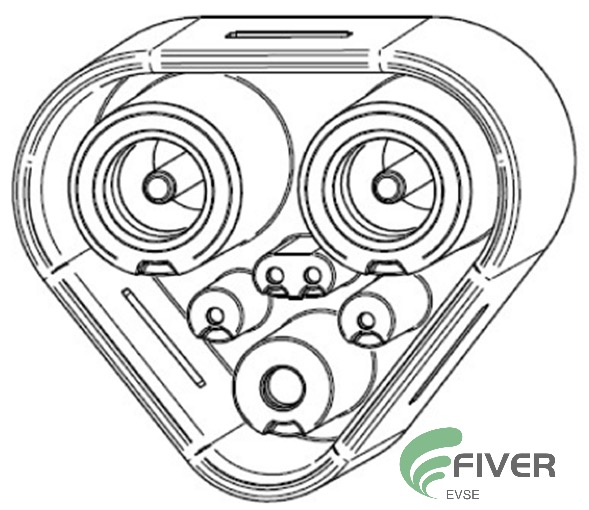
The HH configuration is a single-circuit design rated at 1,500 volts and up to 3,000 amps. This is the "go fast" option, perfect for our 1500V 1500A Megawatt Charging Port 2.25MW MCS Inlet—ideal for:
- Long-haul trucking corridors
- Mining operations where vehicles need quick turnarounds
- Any scenario where "charge and go" is the priority
The design is straightforward: one pair of DC contacts, optimized for maximum current-carrying capacity. Our MCS Inlet uses carefully designed liquid cooling channels that maintain stable temperatures even at full rated current. Rated at 2.25MW, it delivers the power heavy-duty fleets need to keep moving
Configuration JJ: Redundancy for Critical Operations
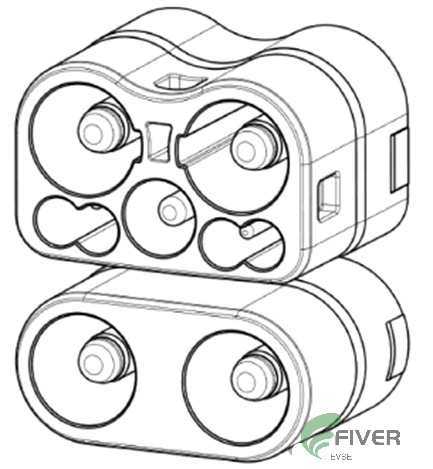
The JJ configuration uses a dual-circuit design. Same voltage (1,500V), but the current is split across two independent pairs of DC contacts, each rated for a maximum of 800 amps.
This might seem like a compromise, but it's actually perfect for applications where reliability trumps raw speed:
- Marine vessels and ferries
- Data center backup power systems
- Military applications
- Any operation where downtime has severe consequences
If one circuit experiences a problem, the other can continue operating at reduced power. For fleet operators who can't afford unexpected outages, this matters.
Our JJ configuration products include intelligent current distribution that automatically balances load between the two circuits based on battery status and thermal conditions.
Chapter 4: Materials and Mechanical Requirements
At 3,000 amps, material selection isn't about optimization—it's about survival. IEC TS 63379 specifies exacting requirements that leave no room for compromise.
Contact Materials: Silver Plating Is Mandatory
The standard requires all DC contacts to be plated with silver or silver alloy containing at least 95% pure silver. You might think pure copper would be better—technically, it has higher conductivity—but copper develops insulating oxide layers when exposed to air. Silver oxide, on the other hand, remains conductive.
We specify silver plating at least 8 micrometers thick, with hardness of 70 HV and surface roughness no greater than 1.0 μm Ra. Every single contact undergoes 100% inspection for plating quality because even a small defect can cause localized heating and eventual failure.
Insulation Materials: The RTI Requirement
The Relative Thermal Index (RTI) of all insulation materials must be at least 100°C. This is different from the short-term heat deflection temperature—RTI measures how materials perform over extended periods under thermal stress.
We use engineering plastics like PEEK and PEI, both with RTI ratings well above 100°C. These materials maintain their insulating properties even after years of high-temperature operation, resisting the embrittlement and microcracking that would eventually affect lesser materials.
The Megawatt Charging Cable 1500V 1500A for Heavy-Duty Commercial Vehicles features premium insulation materials selected specifically for their long-term thermal stability, ensuring consistent performance over the product lifecycle even under continuous high-load operation.
Mechanical Durability
Heavy-duty charging equipment will face rough treatment in the field. The standard requires passing demanding tests including:
- Ball impact tests
- 1-meter drop tests
- Vehicle rollover tests at forces up to 11,000N
- Tensile tests
After all these tests, the cooling system must still maintain seal integrity with no leaks. Our product development process includes finite element analysis (FEA) to ensure our designs can withstand these stresses before we ever build a physical prototype.
The 1500V 1500A/3000A Megawatt Charging Port 2.25MW MCS Inlet & MCS Charging Cable are engineered with a reinforced housing designed to survive these harsh conditions, making it suitable for demanding environments like mining sites, ports, and logistics hubs.
Chapter 5: Testing and Validation
Passing IEC TS 63379 compliance isn't a paperwork exercise. The testing requirements are rigorous, expensive, and designed to catch real-world problems before products reach customers.
Temperature Rise Testing
The temperature rise test is the heart of the validation process. It's not just about measuring how hot things get—it's about understanding the thermal balance of the entire system.
The test requires reaching "thermal stabilization," defined as a temperature increase of 2K or less over three consecutive 10-minute intervals. This can take hours to achieve. We use a reference device to eliminate variability between tests, and we correct all results to the standard 40°C ambient temperature using validated algorithms.
Both our 1500V 1500A/3000A Megawatt Charging Port 2.25MW MCS Inlet and Megawatt Charging Cable 1500V 1500A/3000A for Heavy-Duty Commercial Vehicles have been rigorously tested to verify they maintain safe temperature rise margins under full load conditions.
The Cooling Failure Test
As mentioned earlier, this is the most destructive test in the specification. After the system reaches thermal stabilization at full rated current with cooling operating normally, the cooling is suddenly disabled while maintaining the current. The product must survive for at least 5 seconds without catastrophic failure.
Our products have passed this test with significant margin, thanks to careful thermal design and high-temperature-rated materials. But make no mistake—this test separates products that will reliably protect operators from those that won't.
Chapter 6: Impact on the Industry
IEC TS 63379 isn't just a connector specification. It's a catalyst that will reshape the entire heavy-duty EV ecosystem.
Design Complexity Increases
Traditional electrical engineering isn't sufficient anymore. Engineers working on megawatt charging systems need competency in multiple domains:
- Fluid dynamics (for cooling system design)
- Thermodynamics (for thermal management)
- Structural mechanics (for mechanical integrity)
- Materials science (for component selection)
We've built our R&D team around these multidisciplinary skills, using computational fluid dynamics (CFD) and finite element analysis (FEA) software to simulate performance before building prototypes.
Supply Chain Transformation
Many standard off-the-shelf components simply won't work at these power levels. We've developed strategic relationships with material suppliers to source:
- High-RTI engineering plastics
- Specialty coolants with flash points above 135°C
- Coolant-resistant seals and fittings
Every supplier in our chain undergoes rigorous quality auditing to ensure their materials meet the specification.
Manufacturing Precision
Making megawatt charging products requires a precision revolution. Our production processes include:
- 100% testing of terminal crimps
- Clean-room assembly for cooling systems
- 100% leak testing
- High-precision molding to ensure exact tolerances for automated docking systems
These aren't optional enhancements—they're requirements for producing products that meet the standard.
Chapter 7: Our Product Portfolio for IEC TS 63379 Compliance
We understand that fleet operators and vehicle manufacturers need complete solutions that meet the IEC TS 63379 specification. That's why we Fiver New Energy developed a comprehensive product lineup designed for heavy-duty megawatt charging applications.
1500V 1500A/3000A Megawatt Charging Port 2.25MW/4.5MW MCS Inlet
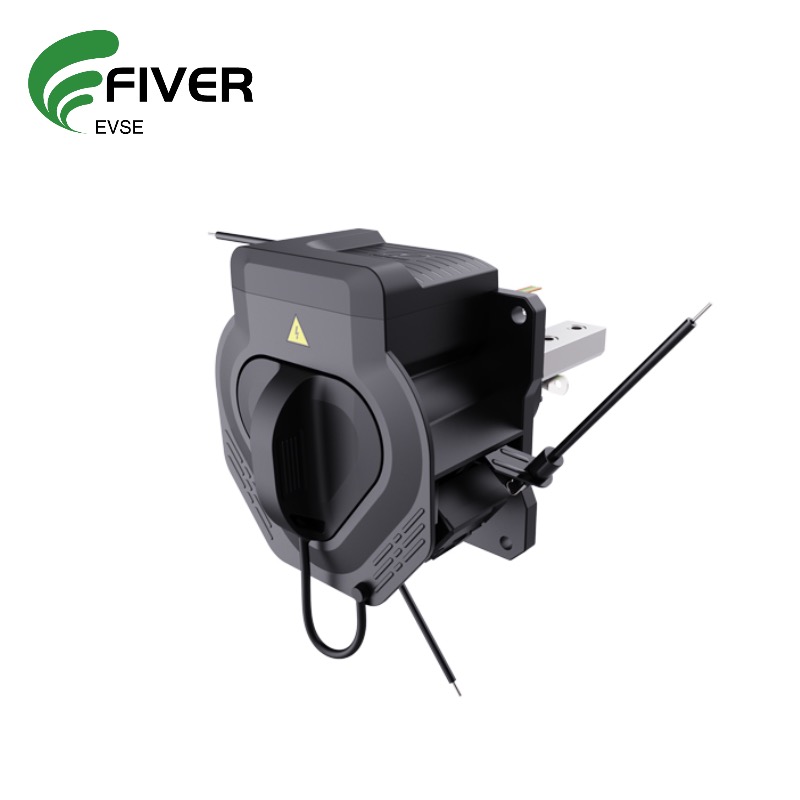
Our flagship vehicle-side component, the 1500V 1500A/3000A Megawatt Charging Port 2.25MW MCS Inlet, is engineered specifically for heavy-duty commercial vehicles that require maximum charging performance. Key features include:
- Dual current ratings: Available in both 1,500A and 3,000A configurations to match different power requirements
- IEC TS 63379 compliant: Designed and tested to meet all requirements of the specification
- Robust construction: Reinforced housing withstands harsh industrial environments
- Precision-machined contacts: Silver-plated contacts with 95%+ purity meet all material requirements
This MCS Inlet is ideal for electric trucks, buses, mining vehicles, and other heavy-duty applications where reliable, fast charging is essential for operational efficiency.
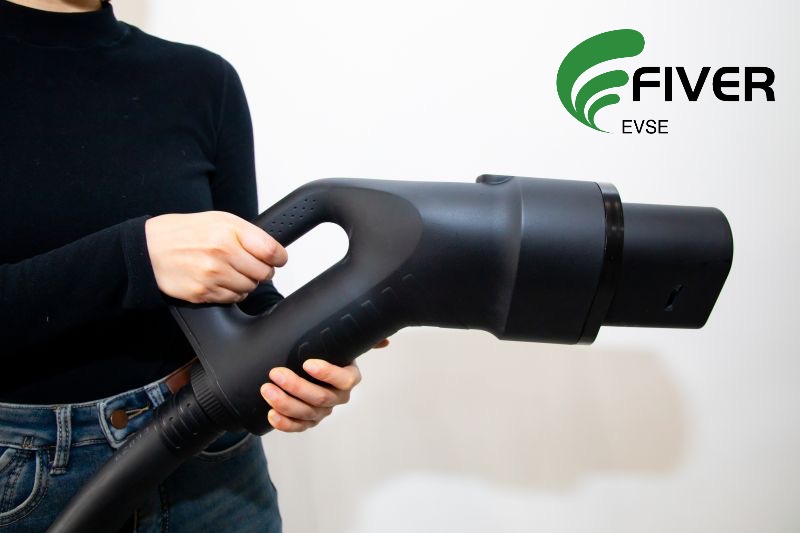
The charging cable is the critical link between the charger and the vehicle. Our Megawatt Charging Cable 1500V 1500A/3000A for Heavy-Duty Commercial Vehicles delivers the performance required for megawatt-level charging:
- High current capacity: Supports both 1,500A and 3,000A continuous operation
- Integrated liquid cooling: Active cooling system manages thermal rise during high-power charging
- Multiple temperature sensors: Redundant sensing points provide comprehensive thermal monitoring
- Premium insulation: Uses high-RTI materials (PEEK, PEI) for long-term thermal stability
- Flexible yet durable: Designed for repeated flexing while maintaining structural integrity
- Compatibility: Works with IEC TS 63379 compliant charging equipment
This cable is designed to pair perfectly with our MCS Inlet, providing a complete end-to-end solution for heavy-duty vehicle charging.
Conclusion: Why IEC TS 63379 Matters Now
The heavy-duty EV market is accelerating faster than many predicted. According to industry forecasts, global sales of medium and heavy-duty electric trucks could exceed 800,000 by 2030. Each of these vehicles will need charging infrastructure that can actually support commercial operations.
IEC TS 63379 provides the foundation for that infrastructure. It establishes clear technical requirements that manufacturers can design to and operators can specify with confidence. It's not just about technical compatibility—it's about creating an ecosystem where heavy-duty EVs can operate as efficiently as their diesel predecessors.
For companies in this space, understanding and complying with this standard isn't optional. It's the price of entry for the next phase of the industry.
We've invested heavily in building expertise around IEC TS 63379, from material selection to testing capabilities. If you're evaluating charging solutions for heavy-duty applications or need guidance on compliance requirements, we're happy to share what we've learned.
Frequently Asked Questions
Q: What power levels does IEC TS 63379 support?
A: The initial version supports up to 3.75 megawatts, with 1,500V maximum voltage and 3,000A maximum current.
Q: How is this different from CCS charging?
A: CCS was designed for passenger vehicles with maximum currents around 500A. IEC TS 63379 supports six times that current level, requiring completely different connector designs, cooling systems, and safety protocols.
Q: When will megawatt charging infrastructure be widely available?
A: Pilot installations are beginning in 2027-2028, with broader commercial deployment expected in the late 2020s and early 2030s.
Q: Can existing electric trucks use megawatt chargers?
A: New vehicles will need to be specifically designed with MCS-compatible inlets. The standard defines both vehicle-side and charger-side requirements.
Q: What products do you offer for IEC TS 63379 compliance?
A: We Fiver New Energy offer the 1500V 1500A/3000A Megawatt Charging Port 2.25MW/4.5MW MCS Inlet for vehicle-side installation and the Megawatt Charging Cable 1500V 1500A/3000A for Heavy-Duty Commercial Vehicles for charging infrastructure. Both products are designed to meet IEC TS 63379 requirements.
Categories
Latest News
Contact Us
Contact: Jerry Zhan
Phone: WhatsApp: +8618028699987
Tel: +86-023-20791348
Add: No.2201,AESC Center, Yubei District Chongqing China